Study Abroad-terminer utomlands
Plugga en eller flera terminer på ett topprankat universitet i Kalifornien? Alex från UC Santa Barbara berättar i podden om study abroad, kurser, boende och kostnader.
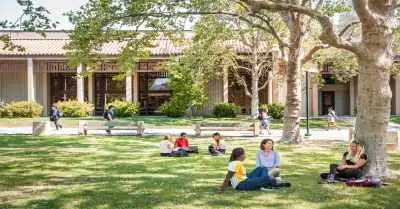
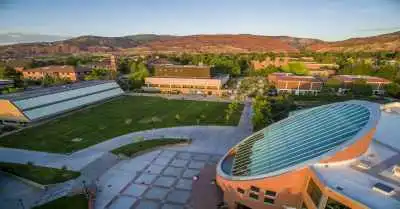
I det här avsnittet av Utlandsstudiepodden reser vi till Kalifornien och pratar om study abroad-terminer, alltså att läsa fristående kurser på ett universitet utomlands utan att gå en hel utbildning. Johan Asplund intervjuar Alex från University of California, Santa Barbara, ett av USA:s högst rankade offentliga universitet. UCSB har quartersystem, så man kan börja fyra gånger om året och läsa från ett quarter upp till ett helt år. Man behöver inte vara inskriven på ett universitet hemma, så det går att åka direkt efter gymnasiet som ett gap year.
Alex förklarar skillnaden mellan de yrkesinriktade diplomaprogrammen och University Immersion Program, där man fritt väljer kurser från över 50 institutioner. Vi pratar också om OPT efter nio månaders studier, hur poängen räknas om till ECTS, boende i studentområdet Isla Vista, kostnader och stipendium, och hur lätt det är att bli antagen. Intervjun är på engelska, och Johan sammanfattar på svenska i slutet av avsnittet.
Utlandsstudiepodden är Utlandsstudier.se:s podd om att studera utomlands. Vi intervjuar svenska studenter på universitet och högskolor runt om i världen och ger dig tips och nyheter om utlandsstudier. Podden leds av Johan Asplund.
Transkript av podden
- Intro 00:35
- Vad är study abroad? 01:53
- Quartersystemet 04:02
- Vem kan plugga på UCSB? 05:59
- Gap year 09:34
- Vem ska plugga utomlands? 11:08
- OPT 13:48
- Diplomaprogram eller UIP 16:02
- Kurser och poäng 19:04
- Varför Santa Barbara? 21:22
- Läget i Kalifornien 24:23
- Boende 26:19
- Startdatum och ansökan 28:58
- Covid 32:07
- Kostnader och stipendium 34:00
- Antagning 38:09
- Avslutning 41:42
- Sammanfattning på svenska 44:36
Intro
Johan 00:35 Ja, varmt välkomna tillbaka till Utlandsstudiepodden. Idag ska vi bege oss till soliga Kalifornien prata om study abroad-terminer, det vill säga att läsa fristående kurser på universitet utomlands i en eller två terminer utan att behöva gå en längre utbildning. Större delen av dagens podcast är på engelska för att vi har med oss en engelsktalande gäst. Men jag kommer att sammanfatta det vi pratat om på svenska i slutet av podden. So, now I'm happy to introduce Alex from high-ranking University of California, Santa Barbara. Welcome, Alex. We're happy to have you with us.
Alex 01:13 Good, good. Thank you so much for having me. I'm really excited to talk about UCSB, to talk about California, studying abroad, and so I'm just happy to be a part of this. Thank you.
Johan 01:25 Yes, we're really happy to have you here. Today we'll talk about study abroad semesters at universities abroad. You can do this in many different countries, but the US is the most popular country in the world for study abroad, and many American universities offer this opportunity to international students, and not least UC Santa Barbara that you represent. So Alex, Can you tell us a bit more about study abroad programs?
Vad är study abroad?
Alex 01:53 Sure. So, you know, in my opinion and in what I do, you know, over the past three years, I really think studying abroad and being in another country and immersing yourself in a different culture and a different area of the world is really one of the most important things you can do as an individual. And then in addition to that, adding studying or education on top of that, on top of being in another country, I think really gives you a wealth of experience, you know, professional experience, academic experience. So there's a lot to be gained from it. But, you know, our program, the study abroad program, kind of in general, really opens you up to the entire campus of UC Santa Barbara. So we have classes that can be taken in, you know, academic areas, engineering, science, social sciences, all of that. We also have professional education as well.
Alex 02:50 So if you're interested in really preparing yourself for a career in business, project management, marketing, all of those professional oriented subjects, our program is designed to give you the choice in what you want to do. So the study abroad program with us is really up to you. We give you the ability to take the classes and to be here and to be a part of our community. But at the end of the day, it's really your choice on what you want to take. And we work with you. We work with your home institution to really give you the opportunities that you need. So our study abroad program is giving you the freedom, the flexibility, ability, and the ability to choose the classes that you want and choose the experience that you want. So I think that really encapsulates what study abroad is, is we don't want you to feel constrained. We want you to feel free and happy to be here. And so when I think of study abroad and specifically at UCSB, it's how can we make our students feel welcome and in charge of their
Quartersystemet
Alex 04:02 their own academic plan. And so that's what we do at UCSB.
Johan 04:06 Yeah. And for how long can you come as a study abroad student? How many semesters?
Alex 04:13 So one unique thing about the UC system, you know, UC Berkeley, UCLA, all these different UC schools is that we are on the quarter system. And so that's a little bit different than semesters. Our quarters tend to be about 10 to 11 weeks long. And we have four quarters throughout the year, fall, winter, spring, and summer. And so students can come for as little as one quarter, just for the fall quarter, if they'd like, or they can study for all four quarters or even beyond that. So we have the ability to do something more short term, as well as longer term. And if you're looking at something that corresponds to your semester system. Our students that come from like a semester school tend to stay for two quarters. So that would be about 20 weeks, which is very similar, maybe a little bit more than a semester.
Johan 05:12 Yeah, in Sweden it's about 20 weeks per semester.
Alex 05:15 Exactly. So our students from those schools tend to stay two quarters, and that really kind of aligns with what they're looking at. So, you know, as little as one quarter. And even, you know, I should mention, even in the summer, we have even really short term sessions that are even three to six weeks long. So we have the ability to really do something kind of unique in the summer. If you only have a short, you know, a short availability, we can, you know, come to Santa Barbara, enjoy it, study, and then go back home. So we have summer, which is a little more flexible than other quarters, but our main quarters are fall, winter, and spring.
Alex 05:57 And those are about 10 weeks long.
Vem kan plugga på UCSB?
Johan 05:59 Yeah, sounds great. And if we look at study abroad semesters in general across the U.S., can you take this at most U.S. colleges and universities or only selected schools?
Alex 06:14 Well, you know, that's a little bit of a complicated question. I would say overall, yes. There's obviously many opportunities to study abroad in the U.S., But some of them have restrictions on who can study at which institution. And if you have a partnership, if your home institution has a partnership with the institution in the US, that's great. If you don't, then you can't study at that at that school. So sometimes there's some larger politics involved with home institution and, you know, destination institution. So sometimes there's those restrictions, like you can only go to a set amount of institutions, you know, as an international student. But, you know, for speaking, you know, for my programs, for our UCSB international programs, we accept any student from anywhere. We don't have any restrictions on who can study at UCSB. We do have application requirements that you need to fulfill, but as a student coming from, you know, any country, we accept, you know, there's no restrictions on that. So, you know, when you're thinking about studying abroad in the US, that's a question that you should ask about your destination institution. You know, can I study there, obviously, is a good question, but does my home institution need a partnership? Do I have to come from a certain university? So those are some questions to ask. But as far as UCSB, we don't
Alex 07:57 have that requirement, and UCSB is open to any student.
Johan 08:01 Yeah, so basically, to study with you, a students don't even have to be enrolled in a university in their home country?
Alex 08:10 Correct. So you don't need to. We have programs that, we have a few programs, and maybe we'll talk about those more in detail, but we have programs that don't, yeah, you don't have to be enrolled at a university to come and study with us. And then there's other ones that do require you know, that do require you're working on your degree or something else like that. So, yeah. So you're right.
Johan 08:39 Yeah, so for you, basically the minimum requirement would be that the student have graduated from high school in their home country, and of course have a certain English level, and depending on the program, some other requirements, of course, too.
Alex 08:52 Exactly. And so that, like, if I may, I'd like that, if you are one of those students that, you know, you're not pursuing a university degree, but you graduated high school and you want to come and study, we do have a diploma program. It's called an international diploma program. And those are the subjects that I was saying that are more professionally focused, marketing, project management, web development, coding, you know, things like that, that are more geared towards getting you a job. Those do not require any type of degree or working on a degree at a university. So, yeah, so we can really assist students that, university students or non-university students, we're here to help.
Gap year
Johan 09:34 Yeah, that's great. And I mean, that also opens up the opportunity for some students to basically take a gap year with UCSB after high school, if they would like to do that. Because I know some universities, both in the US and other countries, don't allow that. Some universities demand that you have to be enrolled in a university in your home country and able to come in order to come there and to study abroad semesters, while others are more flexible like you guys.
Alex 10:01 And again, you're highlighting kind of the politics a little bit about studying abroad. Maybe you would need to be a university student at other institutions, but not with us. You're right. And so that gap year, like you're saying, it is. I wouldn't say it's it's very common for our students right now. Right now, we we tend to get more university students, but we would like to change that and focus on those gap year students or students that are taking a break. And, you know, in all honesty, that's a good time to travel to, you know, like if you're taking a gap year, you you can have a you can really have a good time while you're here, while you're studying, of course, but it gives you a little bit more freedom when you're not at a university or other things that you're thinking about fulfilling requirements and qualifications for your home university. During a gap year, you can come and study and study something you're really interested in and do those classes. But at the same time, get out to the beach, go surfing, go traveling around California. I would recommend it's a great time to be traveling.
Vem ska plugga utomlands?
Johan 11:08 Yeah, sounds great. So who should take a study abroad semester with UCSB or another U.S. institution?
Alex 11:19 So I would say every single student should. That's my answer. But let me tell you a little bit about what we see, uh, in, from kind of like a historical perspective. Um, like I was saying, um, we tend to have more of the university students that are either in their second or third year, um, or have finished their undergrad and are wanting to go into graduate study. So that's the highest majority of our students are university students that are close to graduating from their undergraduate degree or are going into graduate school or in graduate school and want to get a few units or a few credits here. Now, that tends to be more with our academic study abroad program called the University Immersion Program. And that tends to see those type of students. But, you know, getting back again to the diploma program, we are starting to see more students that are, you know, either in, you know, a technical job or are just wanting to go into a career or in a kind of an internship or apprenticeship type of status, I guess, and are wanting to specialize in a professional subject. We are, you know, seeing more and more of that, um, as well. And, um, so we, we get, like I was saying, we get
Alex 12:48 kind of the, the, the spectrum of student here. So, um, while I am a big advocate for studying abroad and, and going abroad and being in another country and learning new things and seeing new things, um, I do recommend also making sure that, you know, you're, if you are at a university that they you know that you can study abroad here successfully and transfer your credits back yeah um and as well as if you're in a different situation making sure you can have the time off and everything to study abroad so um but that's my job my job is to help you understand that and to help you make sure that everything is okay on your you know on the home side of things the home side of things. So if you ever have any questions, we're here to help.
Johan 13:35 Yeah, but that's very important of course, for students who are enrolled in university to be able to bring their credits home. And of course, to study with a well-known institution like UCSB, that's usually much easier
OPT
Johan 13:48 than if you go to a smaller, less known college. That's a great thing. Can students get OPT after studying with you?
Alex 13:56 Yes. Yeah. So that's another thing that is growing and has been growing over the last two years. I think it's because we've been promoting it more because it is a great opportunity. So OPT is basically work authorization in the US for one to two years after you study with us at UCSB. The one main requirement that is important to know is that you have to study with us for at least nine months. So that's a US government requirement. You can't just come and study for one quarter and then get work authorization. You need to study for at least three quarters, nine months. And that enables you to be eligible for work authorization. It's something you need to apply for with the U.S. government. We assist you with that application process and are with you the entire time. But we have a great success rate. All of our students, we have 100% success rate with OPT. And so if you're interested in working in the U.S., whether it's in California or anywhere in the US, we can help you to get a work authorization for one year. If you are in the STEM fields, in the science, technology, engineering, those types of fields, you may qualify for up to two years of OPT authorization.
Alex 15:21 But really the most important thing to keep in mind in just hearing this is that you do need need to study for nine months, so the academic year: fall, winter and spring.
Johan 15:32 Yeah, and your work has to be related to your major, right?
Alex 15:39 It's a little loose there. Especially in the STEM fields, yes, it needs to correspond with what you studied for, and that's kind of one of the US government's criteria. But, you know, if you're studying business or economics or communication or sociology, those can be applied in
Diplomaprogram eller UIP
Alex 16:02 many different areas. So there's a lot of opportunity there.
Johan 16:07 Yeah. And as a study abroad student, if you take more the academic... I guess if you do these kind of diplomas, more kind of vocational style programs, then you pretty much have a fixed schedule that you follow. But if you do the more, what do you call your other version, the more academic track, then I guess students can more or less choose their courses freely, or do they still take specific tracks within that program?
Alex 16:36 Yeah, good question. So that's, again, that's the University Immersion Program, we call it UIP for short, and yes, the key word there is free and freely. So students can choose from all of our academic departments at UCSB. We have over 50 academic departments on campus. And students are able to choose both undergraduate and graduate classes. So, you know, I'm learning a lot about, you know, other countries, you know, higher education systems. So, you know, for example, in Germany, a lot of our students that are coming from Germany, um, you know, they do kind of a, you know, um, an undergraduate right into graduate school type of program, which I'm, I'm sure is pretty similar in Sweden or other, countries in, uh, in Europe, in and around Europe. And so they tend to take some undergrad classes and some graduate classes. So you can be free to choose a, you know, one undergrad class and two graduate classes or, you know, so even mixing between the levels is totally fine as well, not just between subjects. But of course, with that is you need to have the prerequisites.
Alex 17:51 Yeah. So professors and departments will ask you if you're taking, you know, really high level engineering or high level economics, whatever it may be, you will need to show your transcripts to professors and departments. So while you do have the freedom to choose from all the different departments, within that you will need to show your past, you know, academic experience, to make sure that you do have the ability to kind of, you know, do well in the class and everything like that. So, yeah.
Johan 18:27 Yeah, often certain classes build on others, so you have to take them in the right order. But basically, otherwise, if I would go study with you, I could take like a dance course, a programming class, a marketing class and a psychology class, more or less, and kind of see what I enjoy?
Alex 18:44 Exactly. Absolutely. And that is something that's definitely been done. You know, students take more arts classes and then combine it with a coding or more of a tech class. And so it's really unique what our students come up with. So that's really nice.
Johan 19:01 Yeah, that's a really nice way to try different
Kurser och poäng
Johan 19:04 subjects and experience many things. And how many courses do you usually take per quarter?
Alex 19:11 So, yeah, so per quarter it's a little bit different again than the semesters. And so we recommend about three to four courses of undergraduate study per quarter. So that amounts to about 12 to 16 units, like UC units. And we can help you do the conversion to wherever your home university is. And so that's usually a full load. If you're taking graduate classes, we usually say about eight units because they're pretty intense and they're pretty short term. So we say about eight units, that's two classes of graduate study or about three to four of undergraduate study.
Johan 19:56 Yeah. How does your units compare with general American credits? Are they the same or do you have some special UC?
Alex 20:05 They're the same, but they are different than semester units. So there is some conversion that needs to happen.
Johan 20:15 Yeah. But they're equal weight?
Alex 20:17 Yeah, obviously. But there's just a different amount, you know, a different math equation that you need to get. I know that for a lot of our students, they tend to operate more in semester units, obviously, and so we just do the, you know, the times 1.5 or whatever it is.
Johan 20:39 Yeah, because that's the kind of conversion I'm used to. I know that ordinary US semester schools, so often you can get like 15 credits per semester, would equal 30 European ECTS credits, for example.
Alex 20:53 Exactly. So if you did two quarters at UCSB, it would be equal to the 30 ECTS that you would need for the semester. So it really works out well and corresponds well if you take the two quarters. It corresponds well to the semester.
Johan 21:13 And then you can just say, if you just did one quarter, it would probably equal out to about 15 ECTS, maybe 15 to 20, depending on...
Varför Santa Barbara?
Alex 21:22 Yeah, the course, on your course.
Johan 21:25 OK. Sounds great. And why Santa Barbara as a location?
Alex 21:32 Oh, man. OK. So this is the question that I love to address. And, you know, just just to give you a perspective on today. It's sunny and 70 here in Santa Barbara, which is about the usual all year round. We tend to say that California and Southern California is summer all year round. So for those of you that are coming from cold areas of the world, Santa Barbara will be a welcomed destination for you any time of the year, of course. So, you know, obviously, Santa Barbara is a destination for leisure, for travel, for tourists, you know, outside of education. We have a lot of people coming to Santa Barbara just to enjoy it on just a travel basis. And maybe some of you have been here just to do that yourself.
Alex 22:26 So it's a nice beachside town. It's not big. It's very small. It's not like Los Angeles or San Francisco. You're not going to get lost in a big city. It's very small, safe, connected. And so on that level, on just like a travel destination level, it is very welcoming in all of those ways. There's lots to do. We have the beach, we have the mountains. So there's a lot to do while you're here, while you enjoy, you know, the weather as well. But, you know, in addition to that, in addition to, you know, it being a travel destination is UCSB has a great academic reputation.
Alex 23:13 So we really combine fun and study together in a really reputable and really well-known type of way. So not just are you having a good time and it's a good destination, but you're really being challenged academically and educationally. And you can feel proud of those, you know, those units and those credits that you're bringing back to your home university or a diploma that you're earning while you're here to know that UCSB is a really advanced and progressive institution in the U.S. So we're ranked number seven in the U.S. for public education, a public education institution. So we're top 10 every year. And that's throughout the US, not just in California. So we feel very proud of that. So yeah, again, not just is it a beautiful place to come and be, you can learn surfing, you can go kayaking, you can go on sunset cruises, you can go on hikes, you can do a lot of really, really fun things. But also you'll be you'll be ready to work in the classroom as well.
Läget i Kalifornien
Johan 24:23 Well, it sounds like the perfect combination, sun and beach in California and a high-ranking school at the same time. So really the best of both worlds. How far is it down? Is it Highway 1 that runs through Santa Barbara and all the way down to Santa Monica and LA?
Alex 24:43 Exactly, yes. So you can kind of think of it, if you don't know California geography too well, you can kind of think of us between LA, Los Angeles, and San Francisco. So the Bay Area and LA, we're kind of almost in the middle. We're a little bit closer to LA, we're about two hours outside of it. So it's really nice that, you know, you can go and visit LA really easily and then come back to Santa Barbara and kind of feel a little bit more, not the big city, a little bit more small town.
Johan 25:12 Can walk around a bit more, enjoy more relaxed.
Alex 25:19 Exactly, exactly. So there's that. And yeah, Highway 1, that's definitely a thing that many of our students do, in fact, is go up Highway 1 up to San Francisco, or up even to the Redwoods way up there, or down to LA and San Diego. So it's really well connected. It's all along the beach, all along the ocean there, of course. So, yeah, and really, I think our students really have a good time while they're here. California really welcomes students and international, you know, tourists and international people, because there's just a lot to do here. We have, you know, you can go skiing and surfing in the same day, which is not too often you can do around the world.
Alex 26:08 So it's a really fun place to come while you're studying. So I recommend it.
Johan 26:16 Yeah, sounds awesome.
Boende
Johan 26:19 And do you offer accommodation for students on campus?
Alex 26:24 So accommodation is a little, not tricky. I shouldn't say tricky, but it does take some work from the student. So we do have some on campus accommodations like apartment style living for students. It's an application. So you do have to apply for it. So it's not guaranteed, but it is available for our students. So if you want to go that route and living in like a dorm or an on-campus apartment, you can do that. We have a whole housing page that has all the different information for all the different, you know, accommodation styles. I'll tell you, though, that our students tend to like finding their accommodation on their own because they like to live in Isla Vista, I.V.
Alex 27:12 Maybe some of you have known about it, but I.V. is a really small student community. It's a really fun place to live. Lots of parties. It's right on the water. So you can walk down to the beach with friends. And so we don't have any, you know, apartments or anything in IV. They're all kind of privately owned and everything. And so our students find a room with a roommate or, you know, they find their accommodation themselves because they like to, you know, find their own. And, you know, whether it's sharing or on their own or so, we tend to leave it to them to find accommodations.
Alex 27:50 But again, we do have a whole directory on our website of places to look for accommodation. So we really help students to find the opportunities or at least the directories and the resources to find what they want. So we do that. But really, it's kind of up to them if they want to live in Isla Vista. They kind of coordinate it themselves. And then what was just created between UCSB and Santa Barbara City College, which is another community college nearby, we work on housing together with them. So we have even more availability for not just Isla Vista, but also downtown Santa Barbara, Goleta, so all the surrounding areas.
Alex 28:38 So we've really increased our accommodation resources. And even if you're thinking about homestay, if you want to stay with a family while you're here, we have a lot of options for you. But we present the options, and then the students can take it from there and see what they would really like.
Johan 28:57 Yeah.
Startdatum och ansökan
Johan 28:58 Sounds great. And since you have the quarter system, I guess students can start with you four times a year compared to the usually only two times, maybe with another school or three times if they have a summer semester. And how far in advance do they need to apply?
Alex 29:16 Yes, great. And a really good point. That's really something that sets us apart for a lot of, I don't know, I shouldn't say a lot of European schools, but many like the quarter system because it is so short term that they can go and then come back. And if you are somebody who's working or not at a university, if you just need a short time, you can come for that and then leave. So, yeah, we do have start dates four to five times, six times throughout the year because of our summer quarter, it having multiple start dates in and of itself. And so what we say is that, yeah, typically for about four start times throughout the year, we say that the best, we recommend that students apply at least six weeks before the start of the quarter. That gives you enough time to get your visa and to go through that process. Even if you do apply after six weeks before classes begin, we will consider you, and of course, for acceptance. But just know that you will need to visit a U.S. embassy and get your visa and do all of that as well. And that could take some time. So what we recommend is six weeks and before to apply. So obviously, earlier the better,
Alex 30:41 but we usually make that cut off at six weeks. And even if it's after that, that's okay. We'll consider you, but you may run out of time. So six weeks it is.
Johan 30:52 Yeah, I know in Sweden, especially for the fall start, there around August, September, it can be quite a long waiting time to get an interview at the American embassy, and at the same time there's also a long waiting time to get the Swedish CSN funding around that time.
Alex 31:09 Correct. And funding is a big thing.
Johan 31:12 Yep. Yeah, so I think for Swedish students, at least if they want to start in the fall, I would say they better apply at least three months in advance, preferably earlier almost, to avoid the problems. But I think if you go on other start dates, which are less popular, then there will be much less queue at the embassy and at CSN. So then you can come more on a short notice.
Alex 31:34 Yeah, I would say. And, you know, in my experience, fall is always our biggest our biggest intake of students. And our smallest is winter and summer. So our winter quarter begins in January 1st or January 2nd, whatever it may be, very cold time in your area of the world. Come and enjoy Santa Barbara at that time. But just because it doesn't quite line up with the semesters that well, we tend to see our smallest amount of students in winter and summer. So those could be good times for you to come.
Covid
Johan 32:07 Yeah, could be a good time. And now, of course, this year, last year, we have all been struggling with COVID, but it looks like you will be back to face-to-face classes this fall, right?
Alex 32:19 Yes. So our UC president, who kind of oversees all the different UC locations, has said that we are moving forward with on-campus instruction for fall. I'm sure we will retain some online and some virtual classes to accommodate students around the world that can't be here in some way. So there might be a little bit of a transition period from kind of tapering off from online back to in-person while retaining some of the things that will help students that are abroad. But yes, we feel very fortunate, very lucky. California, and especially Santa Barbara, has really rolled out vaccines and the case counts have been very, very low for the past few months.
Alex 33:15 So we're really working out of it, really feel positive and ready to really to resume things as they were, while also being, of course, very cautious and very understanding of the global pandemic and other things like that. So, and I think we've seen students react to that, and we've seen more applications come in for fall, and students ready to come. I think there's going to be a pent-up demand for studying abroad, because this whole year we haven't been able to do it. So I think students are ready, people are ready to travel. I know I'm ready to travel and get out. And so we're ready. So fall, and then definitely
Kostnader och stipendium
Alex 34:00 into winter and spring of next year, we'll be back on campus.
Johan 34:05 Yeah, that's awesome. And a common question, of course, with international students who want to study abroad, not least from Sweden, we're used to free education here, is how much does it cost, how can I finance this, are there any scholarships?
Alex 34:19 Yes, so that's always going to be a question, especially from Sweden, Norway, all those, all those, and Germany even themselves. So I guess I should start by saying, maybe giving a little bit of perspective. We tend to get quite a bit of Norwegian students to UCSB. And they, you know, for obvious reasons, again, coming to, you know, a beachside climate, but they have the same kind of thing where they apply for, whether it's a loan or a grant.
Johan 34:53 Yeah, Lånekassen, it's called.
Alex 34:55 It's a great system. Yeah, to finance their education here. So that's not uncommon. We help to provide the financial documentation about the tuition and other things like that. And actually, we just converted to a flat fee tuition. So students only need to pay one time. And that includes all your tuition, all the student services like public transportation and library use and rec center use. So all of the different student services. So there's just one tuition amount. And that really helps with getting, you know, your loan approved and other things like that. If it's just one thing, it's very easy or straightforward, I should say, for getting those loans. And then in addition, we do have a scholarship, of course, for any student that comes through Dream Studies. And that's about a 15% discount. It's not a full scholarship, unfortunately. And so getting to the pricing, our international diploma program, the one that I was telling you that's a little bit more professionally focused and things like that, that's the cheaper option. And that's at $5,400. And again, that includes all the tuition, as many classes as you would like to take in the diploma program. We allow you to take as many classes as you want.
Alex 36:26 Many schools charge per unit, basically. That's, yeah, exactly. And without charging, you know, more tuition. So that's a really nice thing. And again, all of those student services are included: Health insurance, library, campus transportation, all of that. So $5,400. Again, we have that scholarship, 15% on top of that. And then our university immersion program, that's more academically focused. That's more for undergrad and graduate students wanting to take those classes. That's at $7,400 US dollars. Again, we have the 15% discount. Again, it includes all the different student services as well as tuition. So again, you won't be paying anything beyond that unless you are going to take more units in the UIP program. If you're going to be taking maybe five classes, there may be some additional fees that are required. Our tuition is set for about three classes, three to four classes. So depending on what you take and what you're needing, there may be some extra fees, but we really wanted to convert to a flat fee so that you know, you're not having to... like, once you pay, you're done. You're not having to pay more.
Johan 37:42 That's better, otherwise 100 dollars there, 150 there.
Alex 37:46 Exactly.
Johan 37:46 Hard to get an overview.
Alex 37:48 So, yeah, yeah, so those are the fees that we're looking at. And again, because we have this nice arrangement with Dream Studies, it's a nice discount and a nice way for us to reward you for coming to us and our partners. So, yeah.
Johan 38:07 Yeah, sounds great.
Antagning
Johan 38:09 And if a student fulfills the basic requirements, they have graduated from high school, if needed they're enrolled in university, they have enough English level, they can prove that they have the financing needed, is it easy to get accepted then, or can it still be hard to get into your programs?
Alex 38:28 Yeah, that's a good question. Our students have a really good success rate of acceptance. You know, it's upwards to like 90, 95 percent. And this is because we get students, one, that, you know, if you want to study abroad and if you're taking on this adventure, you're typically a good student. And if you're wanting to travel across the world to study, you're motivated. And so that's always a good sign and really shows that students are successful and have good grades and have good English. So there's that. We know that. And our application requirements are not that heavy, I would say, either. So we're not asking a lot of students.
Alex 39:15 You know, we have about maybe it's a 2.8 GPA requirement. We have a higher intermediate level of English requirement. So it's not like we're asking for perfection, you know. So that's a nice thing, too. And that, I think, helps students feel more comfortable, you know, applying to us. And in the end, we want students. And so if your academic record is maybe not great or your English is not great, we will find a way to allow you to study at UCSB, whether it's taking more English classes or having some requirements for you to take if your GPA is not that great. We can really find a way for you to study here. So even if you're hesitant or whatever, please apply. You never know what we can figure out and what we can do. So we're never a program that just wants to say no without any reason.
Alex 40:16 And we want to figure out a way for you to be here, you know, make your travel, you know, dreams come true, things like that. So so even if, you know, you think you don't qualify or something like that, I think you should try and we can really help you and find a way for you to study at UCSB in some way.
Johan 40:35 Yeah. And I guess that's a good point. Also, when you go as a study abroad student for half a year, a year, that might actually be easier to get accepted on a study abroad program. Than it would be to apply to one of the undergraduate programs, for example, at UCSB if you apply directly.
Alex 40:54 Absolutely. And that's a great point. Coming to study short term also can serve as almost like a trial period. If you're wanting to go to graduate school in the US or something, you could come and do our program for a quarter and just kind of see how it feels to you and then apply from here. You could even then just transfer to another institution while you're here, and apply some of those graduate units that you earn in our program. You can apply that towards your graduate degree, even. So there's real benefits to studying abroad for a short period or a long period of time. They both have their own benefits, and we're here to help you kind of make sure that you recognize those benefits.
Johan 41:40 Sounds great. So I
Avslutning
Johan 41:42 think we covered most aspects of studying abroad now, and definitely UCSB is a great school, high- ranking school, fantastic location. I would love to come and visit sometime, and I would warmly recommend any student to consider the US and California, to go to UCSB. It seems like a fantastic experience. So, Alex, do you have anything more that you think we should add, that we have missed?
Alex 42:10 Yeah. One last thing that I just want to emphasize to you is that it is my job to make sure you have a good time and to have a good experience. And that doesn't just include while you are here. That includes pre-arrival and before now, as well as post, you know, post completion. And when you go back home, if you have any questions or need anything, you know, me and my team, we are here to serve you and to be counselors and to be, you know, advisors to you on what you can do at UCSB. So we treat it as our mission and our goal for you to have a good time. And so that entails a lot of communication, whether that's email or phone call or Zoom. So always feel free to reach out to us. We are always available. We're here to help. We always get back to our students within 48 hours. So you will have an answer. We really emphasize our ability to be in touch, to be communicative, to make sure you have all the information you need. So that's something we take pride on and I think really sets us apart from other programs. We are dedicated to making sure that you have what you need in order to make the right decision and to study at UCSB.
Alex 43:33 So I just want to emphasize that, and never feel like a bother. We're always here to help. That's it.
Johan 43:44 Thank you so much, Alex. It's been great having you with us in the podcast. And yeah, as I said, we hope that many students will come and study with you at UCSB.
Alex 43:57 Absolutely. We look forward to having you. And we look forward to kind of getting back to our normal international programs and really welcoming students. That's always the best part of our job is meeting somebody that we've emailed with and other things. We meet them here in Santa Barbara. So we really look forward to it. And best of luck in your decisions for studying abroad. And you're in good hands, of course, with Dream Studies. We really are thrilled to be working with them. And Johan, of course. So thank you. Thanks for listening. And hopefully I'll see you soon.
Johan 44:33 Thank you.
Sammanfattning på svenska
Johan 44:36 Ja, det blev en lång podd, så jag ska hålla sammanfattningen kort. Study abroad-terminen innebär alltså att du åker till ett universitet utomlands och läser fristående kurser under en eller två terminer. Eller om skolan har ett quartersystem som UC Santa Barbara så kan man läsa upp till fyra quarters på ett år. Utlandsstudierna kan finansieras med studiemedel från CSN om du studerar i minst 13 veckor. Ibland behöver man dock lite egna pengar för att det ska gå runt. På UCSB är du garanterad ett stipendium på minst 10 % av kursavgiften om du börjar med att göra en intresseanmälan på Utlandsstudier.se. Du kan ta study abroad-terminer på universitet i många olika länder.
Johan 45:17 Vissa skolor kräver att du är inskriven på ett universitet i Sverige men andra kan ta emot dig direkt efter gymnasiet så att du kan ta ett gap year och prova på olika kurser. På Utlandsstudier.se kan du läsa mer om study abroad-terminer, UCSB samt många andra skolor utomlands. Vi ses där!
Mer information
Tips på nya avsnitt? Har du idéer, frågor du vill att vi tar upp eller vill du själv vara med i Utlandsstudiepodden? Kontakta oss.
Lyssna på fler avsnitt av Utlandsstudiepodden.